
Essential Safety Kit for Coastal Path Walking
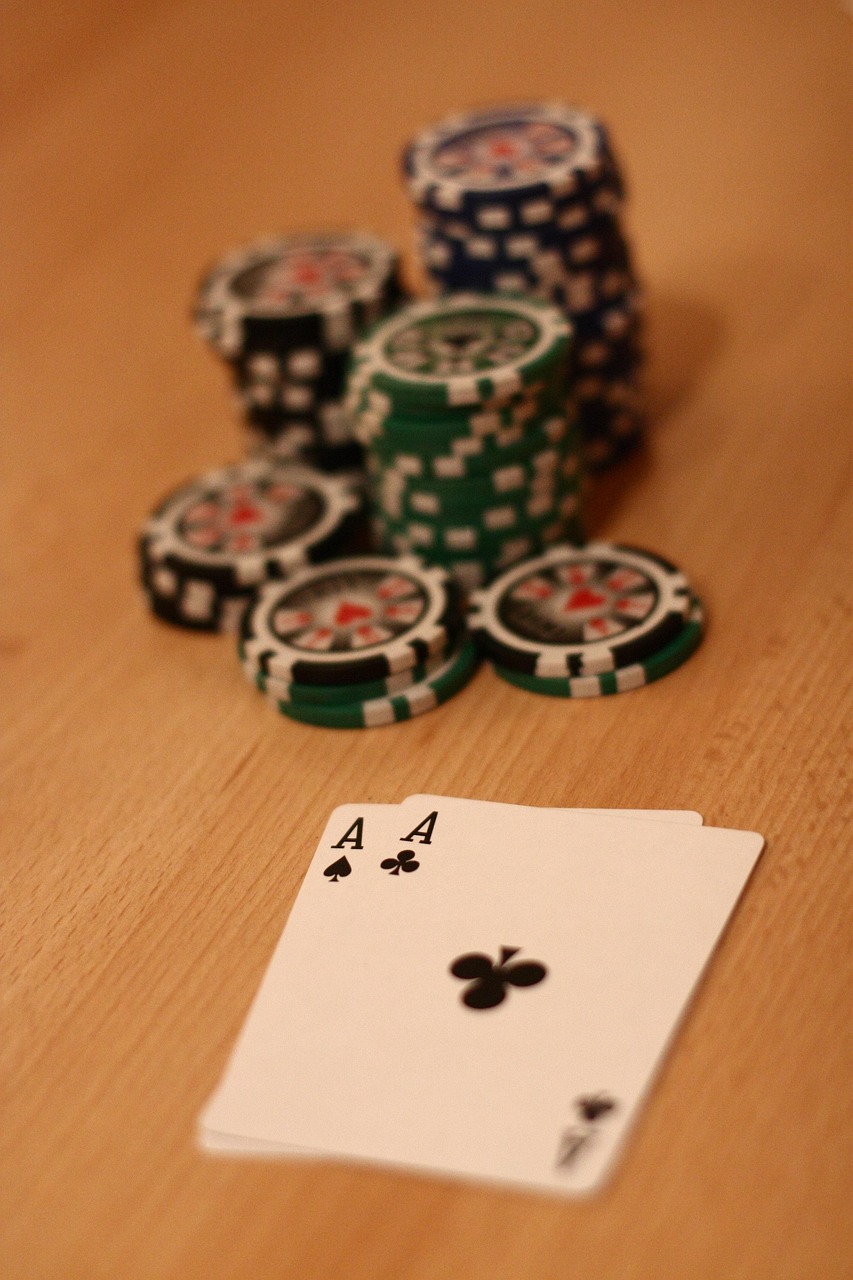
Most players lose not because they pick bad games, but because they pick bad bet sizes. The edge house games hold — 2% to 8% depending on what you play — is small enough that a disciplined player can survive for hours on a modest bankroll. The problem is almost nobody treats their money like a poker pro treats a tournament stack. They treat it like a night out. That single mistake is the difference between an entertaining hobby and a slow financial bleed.
Why Your Bankroll Is a Tool, Not a Budget
A casino budget is what you spend on entertainment. A bankroll is capital you deploy across many hours, sessions, and swings. The distinction sounds semantic until you do the math. If you sit at a $10 blackjack table with $100, you have ten units. Standard deviation alone will wipe you out within roughly 45 minutes on a bad run — and there will be bad runs, guaranteed, no matter how perfect your basic strategy is.
Serious players think in units. A unit is your standard bet. Your bankroll should hold at least 100 units for table games and 200+ for video poker, where variance is nastier. That means if your unit is $5, you shouldn't sit down with $150 and pretend you have a plan. You need $500 to $1,000 behind you, or you need to shrink your unit.
Session Limits That Actually Work
"Stop when you're ahead" is worthless advice — everyone's ahead at some point and nobody knows which upswing is the last one. What works is pre-committing to numbers before you sit down, and writing them down. Concrete parameters beat willpower every single time. See สล็อต for a side-by-side comparison.
- Stop-loss: 30% of your session stake. If you brought $300 to the table, you stand up at $210 lost. No exceptions, no "one more hand."
- Stop-win: 50% profit. If $300 becomes $450, you cash out $150 and keep playing with the $300. Now you can't lose money on the session.
- Time cap: 90 minutes. Fatigue degrades decision-making long before you notice it. The third hour at a poker table is where most good players turn into bad ones.
In poker specifically, number of big blinds matters more than dollars. A cash game buy-in of 100 big blinds means a $1/$2 player should have $10,000 in their roll to play comfortably. The famous "20 buy-in rule" for tournaments isn't conservative — it's barely adequate. Tournament variance is brutal enough that 30 to 50 buy-ins is the realistic threshold.
Slots Are a Different Beast Entirely
Slot math doesn't care about your strategy because there isn't one. But bankroll management still applies, and the numbers are harsh. Modern video slots have variance that would terrify a blackjack player. A high-volatility game like Money Train or San Quentin can eat 300 spins before it pays anything meaningful. If your bankroll covers 50 spins, you're not playing — you're gambling on the volatility curve landing in your lap.
A practical rule for slots: your bankroll should cover at least 200 to 300 spins at your chosen bet size. Playing a 40-cent spin means you need $80 to $120 minimum, and that's a bare floor, not a cushion. Also check the RTP. A 96% RTP slot loses you roughly $4 per $100 wagered in expectation. A 94% slot loses $6. Over 3,000 spins, that gap represents a massive swing in survival time.
Quick slot bankroll checks
- Divide your session money by your spin size. If the answer is under 200, drop your bet.
- Pick games with published RTP above 96% whenever a casino allows filtering — many don't, so use third-party databases.
- Avoid chasing bonuses in slots with 30x+ playthrough on the bonus amount only. The math rarely works in your favor.
The Hidden Enemy: Bonus Terms and Tilt
Casino bonuses are bankroll management's evil twin. A $1,000 match bonus with a 40x wagering requirement isn't a gift; it's a contract worth $40,000 in total bets before you can withdraw anything. At a 3% house edge, that's $1,200 in expected losses against a $1,000 bonus. You can see the problem. Read the terms before you accept anything, and remember that game weighting matters — blackjack often contributes only 10% toward wagering, while slots contribute 100%.
Tilt is the other silent killer. It arrives disguised as confidence. You lose three straight poker hands to a rivered two-outer and suddenly your range widens, your preflop standards collapse, and you're calling 3-bets with J-7 offsuit. The cure isn't mental toughness lectures — it's mechanical. Stand up. Walk for ten minutes. Drink water. If you come back and feel anything but neutral, you're done for the day. Online players should use site-imposed session reminders and self-exclusion tools before they need them, not after.
Tracking Turns This From Theory Into Skill
You cannot manage what you don't measure. A simple spreadsheet — date, game, buy-in, cash-out, hours played, hourly rate — reveals things intuition never will. After 50 sessions most players discover they lose money in two specific games and win in one. That data point alone can rescue a bankroll.
Track three numbers religiously:
- Hourly win/loss rate — your true performance indicator, not total winnings.
- Average session length before tilt — the point your performance drops off.
- Deposit frequency — the card you never expected to be ugly.
Poker players have an advantage here because hand-history trackers exist. Cash-game regulars should invest in one and review leak reports monthly. Even recreational players can spot patterns quickly: if you win 70% of sessions under two hours and lose 80% of those over three, the fix writes itself.
The Bottom Line Nobody Prints on the Banner Ads
The house edge is fixed and unconquerable. What isn't fixed is how long your money lasts, how many chances you get at the variance curve, and whether you walk away with your head level. Bankroll management isn't about beating the casino — it's about buying time, information, and dignity. It's the one edge the casino doesn't advertise because it doesn't cost them anything to let you have it, and it costs you everything to ignore.
Play smaller. Track everything. Stand up early. That's not a slogan — it's the difference between an eighty-dollar Tuesday and an eight-hundred-dollar one. The math doesn't care how you feel about it.
LEAVE A COMMENT