
Essential Safety Kit for Coastal Path Walking
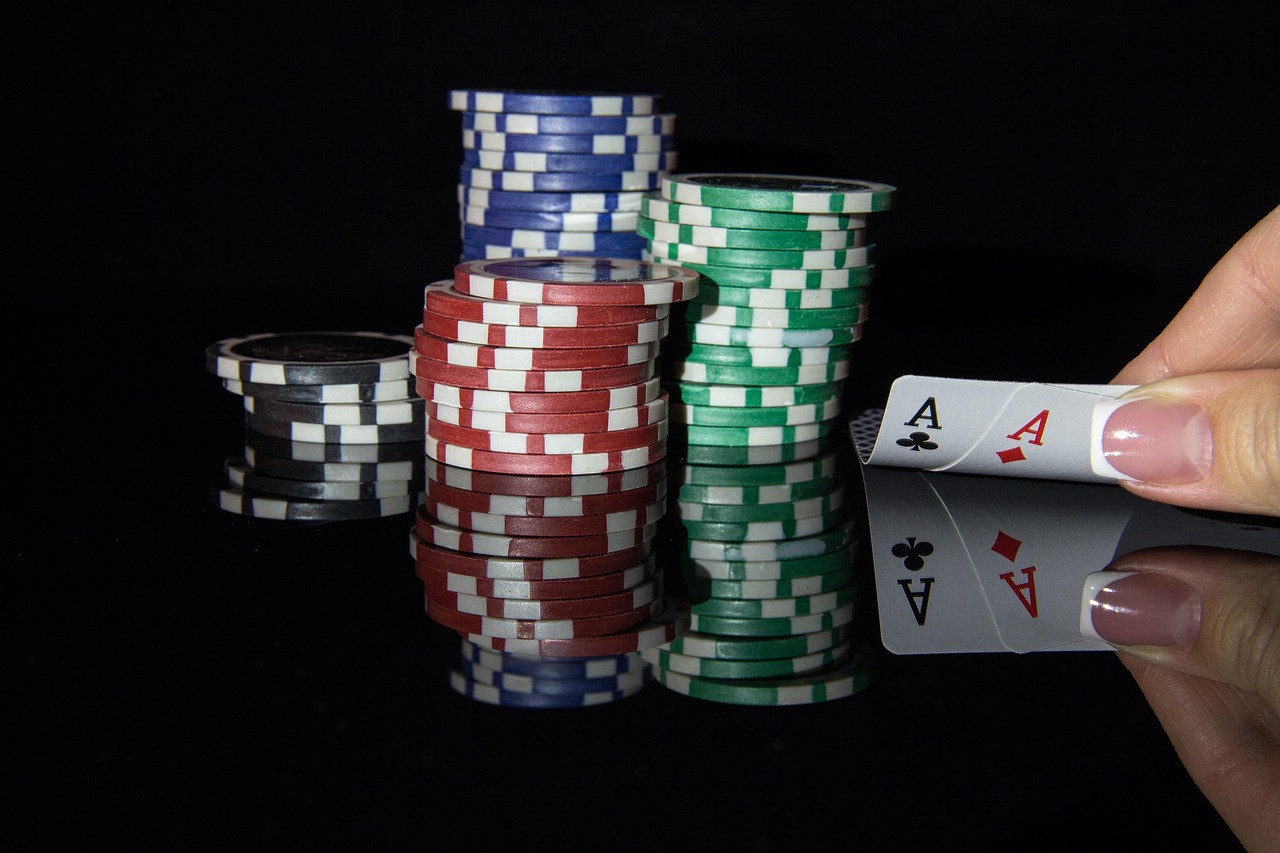
Every gambler remembers their first bad beat. Maybe it was a slot machine that teased three scatters and landed on two. Maybe it was a poker hand where your aces got cracked by a rivered two-outer. Or perhaps it was a parlay that died because a kicker missed an extra point. The common thread? A gut-wrenching feeling that the game is rigged, that luck has abandoned you personally. But here is the uncomfortable truth that separates recreational players from long-term survivors: the house does not need to rig anything. The math does the heavy lifting all on its own. Understanding that math—specifically the concept of variance—is the single most valuable skill you can develop in iGaming.
Variance Is Not Your Enemy; It Is the Weather
Variance is simply the statistical measure of how results deviate from the expected average. In a game with zero variance, you would lose exactly 2.7% of every dollar wagered on a European roulette wheel, every single spin. The casino would grind you down like clockwork. But real games are lumpy. You hit a slot bonus and walk away up 400%. You lose twelve blackjack hands in a row despite perfect basic strategy. That lumpiness is variance, and it is the reason casinos stay in business and players keep coming back.
Think of variance as weather. The climate in a casino is fixed: over millions of hands, the house edge guarantees profit for the operator. But the daily weather—your session result—is wildly unpredictable. A skilled poker player with a 5% win rate over a year can easily post a losing month. A slots player with a 92% RTP game can hit a jackpot on their first spin. Neither outcome says anything about skill or fairness. It is just noise around an average.
Here is a concrete data point: In Texas Hold'em, if you get all-in preflop with pocket aces against pocket kings, you win roughly 82% of the time. That means you lose 18% of the time—nearly one in five. Over 100 such situations, you will lose about 18 of them. If three of those losses happen in a single session, you might feel cursed. You are not. You are simply experiencing the predictable tail of a known distribution.
House Edge, RTP, and Why They Matter More Than Hot Streaks
Every casino game is built on a mathematical advantage for the operator. That advantage has a name and a number.
- Slots: Return to Player (RTP) typically ranges from 92% to 97%. The house edge is the remainder—3% to 8%. A 96% RTP slot loses, on average, $4 for every $100 wagered. But a single spin can pay 5,000x your stake.
- Blackjack: With perfect basic strategy, the house edge can be as low as 0.5%. Play badly, and it balloons past 2%.
- European Roulette: A fixed 2.7% house edge. American Roulette doubles it to 5.26% because of the extra double-zero pocket.
- Video Poker: Jacks or Better with optimal play offers a 99.54% return. That is a 0.46% edge—one of the thinnest in the building.
- Sports Betting: Standard -110 odds on a point spread imply a 4.76% hold for the sportsbook. Sharp bettors hunt for -105 or better.
The takeaway is not to avoid games with a higher house edge. It is to know the number before you sit down. A slots player with a 92% RTP game is donating 8 cents per dollar spun. A blackjack player using basic strategy is donating half a cent. That difference compounds brutally over a weekend.
The Gambler's Fallacy and Other Brain Traps
Human brains are pattern-recognition machines, which is terrible news for gamblers. We see streaks where there is only randomness. We believe a slot machine is "due" after a dry spell. We think a roulette wheel that has landed red eight times must be biased toward black. Both are wrong. Many readers start with สล็อต when comparing options.
Each spin, each hand, each roll is independent. The wheel has no memory. The slot's random number generator (RNG) does not know you have been losing. This is the gambler's fallacy, and it costs players more money than any house edge ever will.
There is a related trap called the hot-hand fallacy—the belief that a player or machine is "on fire" and will keep winning. In skill-based games like poker or sports betting, small edges exist, but they are tiny compared to the variance. A basketball player who has made five shots in a row is not statistically more likely to make the sixth than their season average. The same logic applies to a slot machine that just paid out a jackpot. The next spin is exactly as random as the first.
Professional gamblers combat these biases with strict record-keeping. They track every session, every bet, every result. Amateurs remember wins vividly and forget losses. That selective memory is why so many players believe they are "break-even" when they are actually down thousands over a year.
Bankroll Management: The Only Real Edge You Control
You cannot control the cards, the RNG, or the ref's bad call. You can control how much you risk. Bankroll management is the unsexy discipline that separates survivors from statistics.
- Set a session limit. Decide before you play that you will stop if you lose 20% of your bankroll or win 50%. Write it down. Stick to it.
- Size your bets relative to your roll. A common rule for poker is never buy in for more than 5% of your total bankroll. For slots, treat each spin as a fixed cost and never chase losses with bigger bets.
- Separate gambling money from life money. If you are dipping into rent or grocery funds, you are not gambling—you are desperate. That is a losing mindset.
- Take breaks. Variance can trigger tilt, the emotional spiral where you make terrible decisions to "get even." A 24-hour cooling-off period has saved more bankrolls than any strategy guide.
One more tip: use the tools the operators give you. Deposit limits, loss limits, session timers, and self-exclusion programs exist for a reason. They are not punishment. They are guardrails for the exact moments when your brain stops thinking clearly.
Why Poker Is Different—But Not That Different
Poker is the one game in the casino where skilled players can achieve a positive expected value (EV) over the long run. But even the best players endure massive downswings. A world-class online grinder might win at 5 big blinds per 100 hands. Over 10,000 hands, that is 500 big blinds of profit—but the standard deviation can easily be 1,000 big blinds. In other words, a winning player can lose for 50,000 hands straight and still be playing perfectly.
This is why poker forums are full of "I am quitting" posts from players who are actually beating the game. They cannot separate short-term results from long-term expectation. The fix is the same as in slots or sports betting: volume, discipline, and emotional detachment. If you are a winning player, variance is just the tax you pay for the privilege of eventually collecting your edge. If you are a losing player, no amount of variance will save you—only studying, hand review, and better game selection will.
The Long Game Is the Only Game
Here is the hard truth that iGaming operators do not want you to internalize: the more you play, the more certain your result becomes. For a losing player, time is the enemy. For a skilled poker player or advantage sports bettor, time is the ally. For everyone else—the slots spinner, the roulette enthusiast, the casual parlay builder—the goal is not to beat the house. The goal is to buy entertainment at a fair price.
And that is perfectly fine. A $100 session on a 96% RTP slot machine is not an investment. It is a night out. You pay for the thrill, the lights, the possibility. The mistake is treating it like a retirement plan. Variance ensures that some sessions will feel like genius and others like robbery. Neither is true. The only thing that matters is whether the money you risked was money you could afford to lose. Get that right, and the game stays fun. Get it wrong, and no hot streak will ever be enough.
LEAVE A COMMENT